Exciting new public artwork will soon transform Banyo station, with two large-scale murals to be installed, one on each platform.
Following community feedback, artists Aurora Campbell and Rick Hayward have been selected to create the new artworks for the station.
Thank you to everyone who took part in the consultation process and shared their thoughts on the proposed designs. Community input played an important role in selecting artwork that reflects the character and identity of the local area.
The two murals will create vibrant and welcoming station environments for customers, celebrating Banyo's unique sense of place while enhancing the experience of travelling through the station.
You can view the concept images and learn more about the inspiration behind each artist's mural design below.
Aurora Campbell
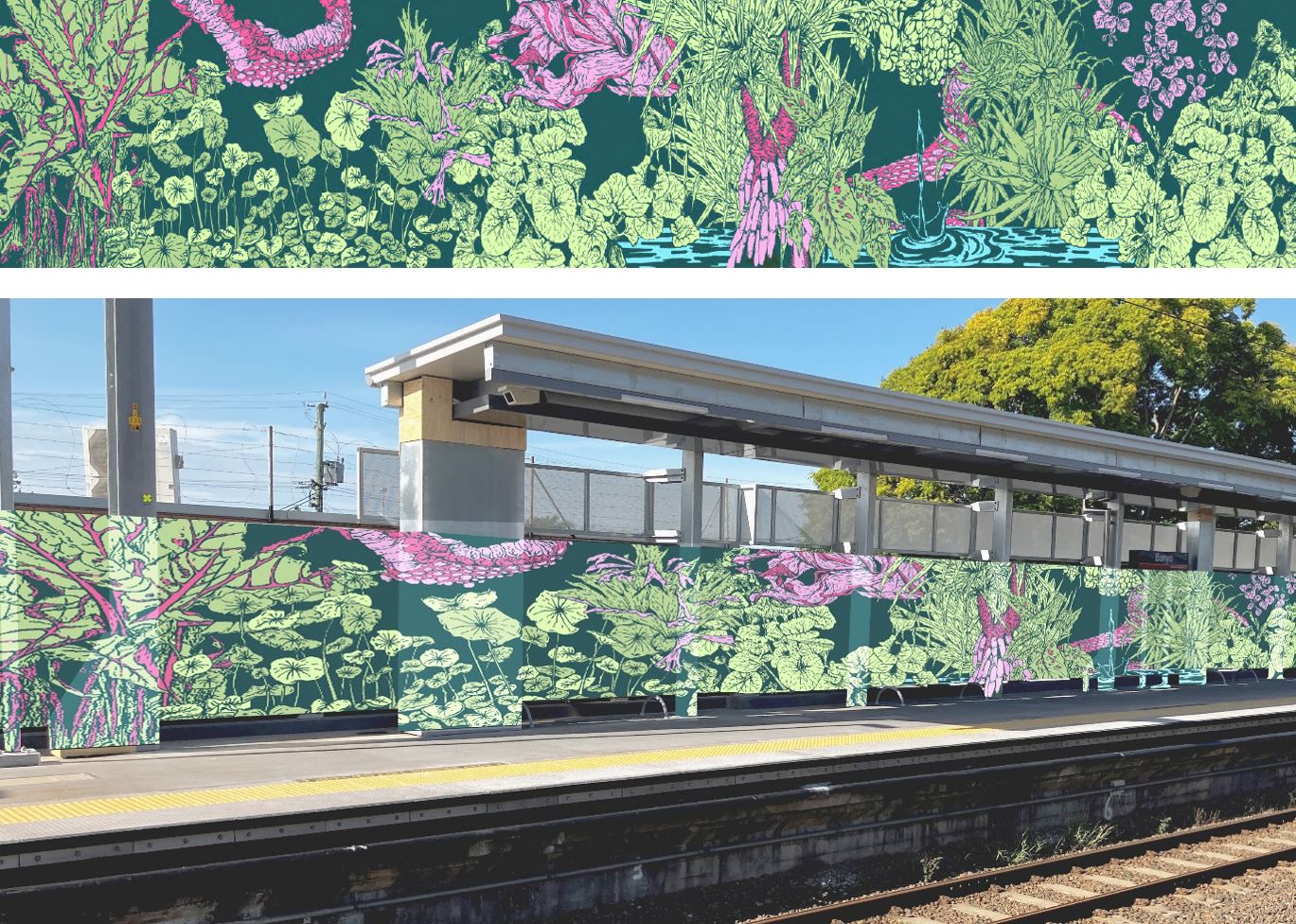 Aurora Campbell's proposed mural for Banyo station is inspired by the nearby Boondall Wetlands and celebrates the area's distinctive subtropical landscape. The artwork draws on native wetland plants, waterways and snakeskin patterns to reflect local ecology and create a strong sense of place. Rather than depicting the wetlands literally, the design aims to capture their atmosphere through layered forms, movement and rich botanical imagery.
The composition creates depth and visual interest through overlapping plants and flowing water elements, reflecting the dense vegetation and interconnected waterways that characterise this part of Brisbane. It is designed to be visually engaging from passing trains while also revealing finer details to people waiting on the platform.
The colour palette centres on soft and deep greens inspired by wetland vegetation, complemented by light blue tones representing water and deep blue-green tones evoking shaded wetland environments. Bright pink accents provide contrast, energy and a memorable contemporary character while remaining connected to the natural setting.
The proposal combines Campbell's signature use of bold colour and detailed botanical illustration to create a vibrant, contemporary artwork that gives Banyo station a distinctive identity while celebrating one of Brisbane's most unique natural environments.
For more information visit
Aurora Campbell's website, opens in new window
Rick Hayward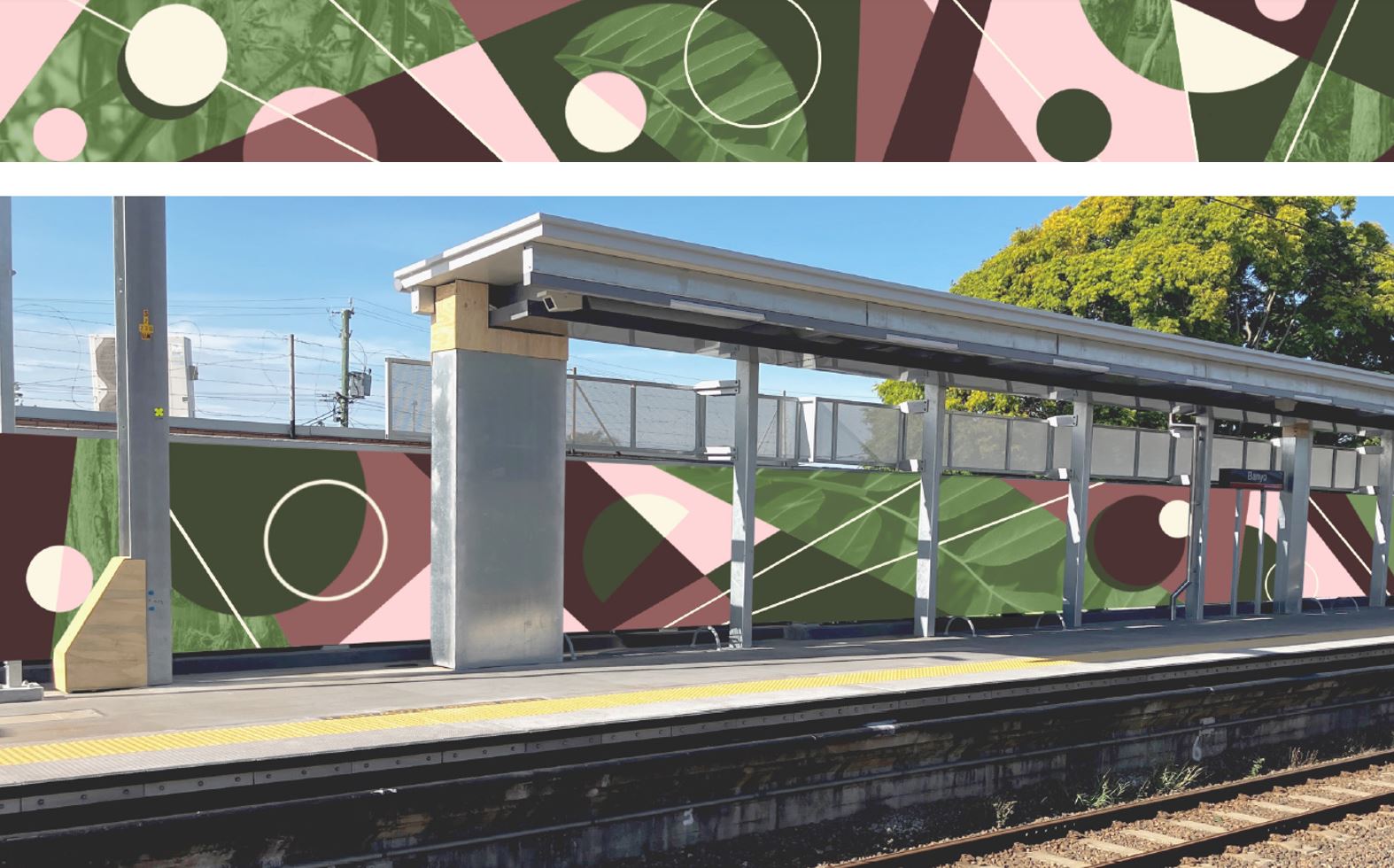
This artwork by Brisbane artist Rick Hayward explores the relationship between Banyo's built environment and surrounding natural landscapes through a bold, abstract visual language. The concept uses harmonious geometric forms combined with textural botanical elements to create a dynamic and engaging composition.
The artwork draws inspiration from the Boondall Wetlands, incorporating references to four key ecosystems: Swamp She Oak Open Forest, Saltpan Vegetation, Mangrove Shrubland, and Swamp Paperbark Forest. These natural elements are interpreted through abstraction rather than literal representation, creating a contemporary design that reflects local identity and place.
Hayward is an experienced Meanjin (Brisbane) artist and former signwriter whose practice combines typography, geometric abstraction and public art. He has completed numerous commissions for Queensland Rail, including artworks at South Bank Station, Eagle Junction and Bowen Hills, as well as projects for councils, galleries and commercial clients across Australia. His work is designed to enrich public spaces and foster connections between communities and place.
For more information visit
Rick Hayward's website , opens in new window
Contact
For more information, please call Queensland Rail's community team on telephone
(07) 3072 9191 (during business hours) or email
communityengagement@qr.com.au